Hearing loss can affect people of all ages, from newborns to older adults. It can occur when any part of the auditory system is not working properly — and left untreated, it can affect communication, emotional wellbeing and cognitive health.
Understanding and treating hearing loss
About 28.8 million U.S. adults could benefit from using hearing aids, yet many have never tried them — and people often wait years before seeking help.
Source: NIDCD, Quick Statistics About Hearing (opens an external website)
Signs it may be time for a hearing test
- Conversations are hard to follow in background noise.
- You turn the volume up higher than others prefer.
- You hear ringing, buzzing or hissing in your ears.
- Family members mention that you miss what they say.
How hearing works
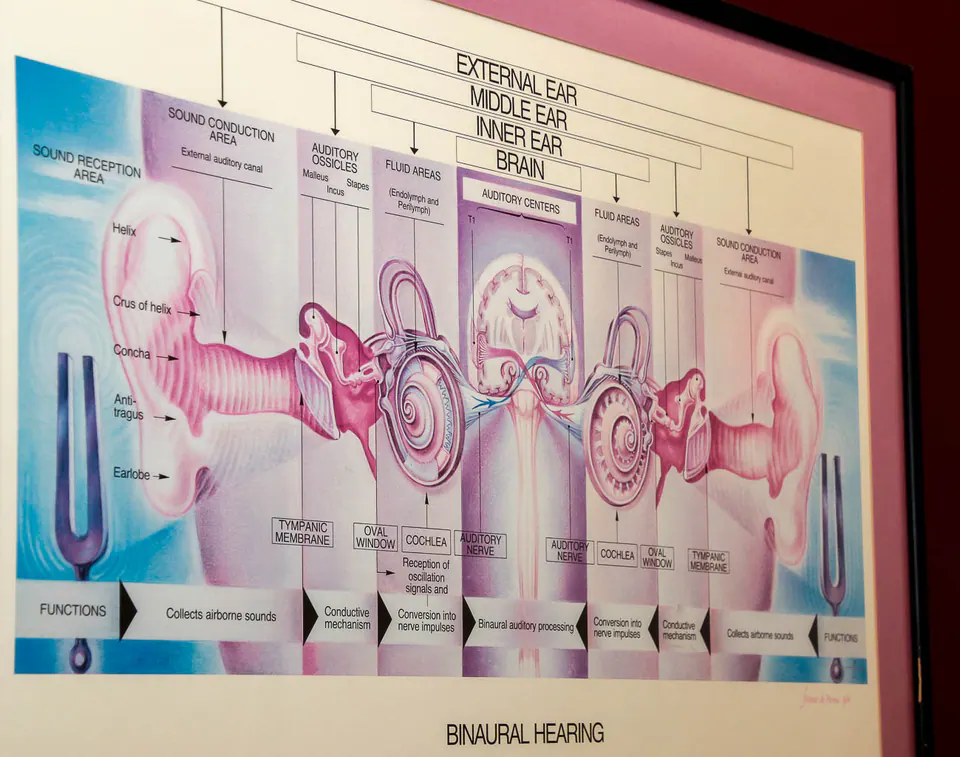
Hearing depends on a series of steps that change sound waves in the air into electrical signals the brain understands. Tap each step to follow a sound’s journey.
Why early treatment matters
For adults
Untreated hearing loss is associated with:
- Depression or anxiety
- Social withdrawal
- Cognitive decline and a higher risk of dementia
- Reduced job performance
- Lower safety awareness
For children
Signs include unclear speech, not responding to sound and difficulty following directions. Untreated, hearing loss in children may contribute to:
- Delayed language development
- Learning and behavior challenges
- Isolation and low self-esteem
Auditory rehabilitation
Auditory rehabilitation helps people with hearing loss improve their communication through a combination of hearing devices, listening strategies and conversation techniques. It benefits children and adults, and can be done in person or at home.
Questions? We’re here to help.
Connect with our team for guidance about your care or your family’s next steps.