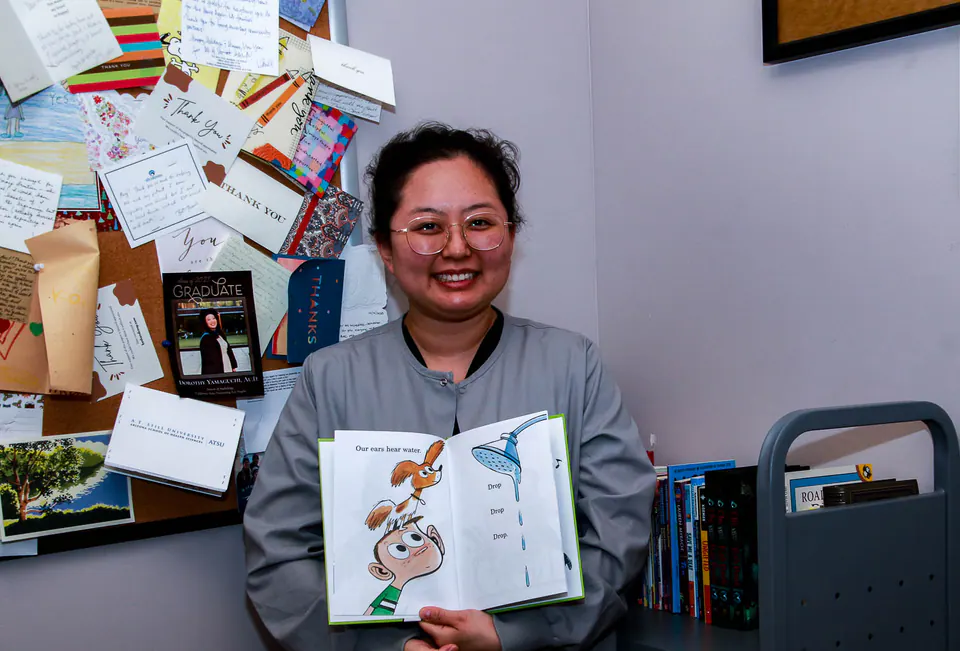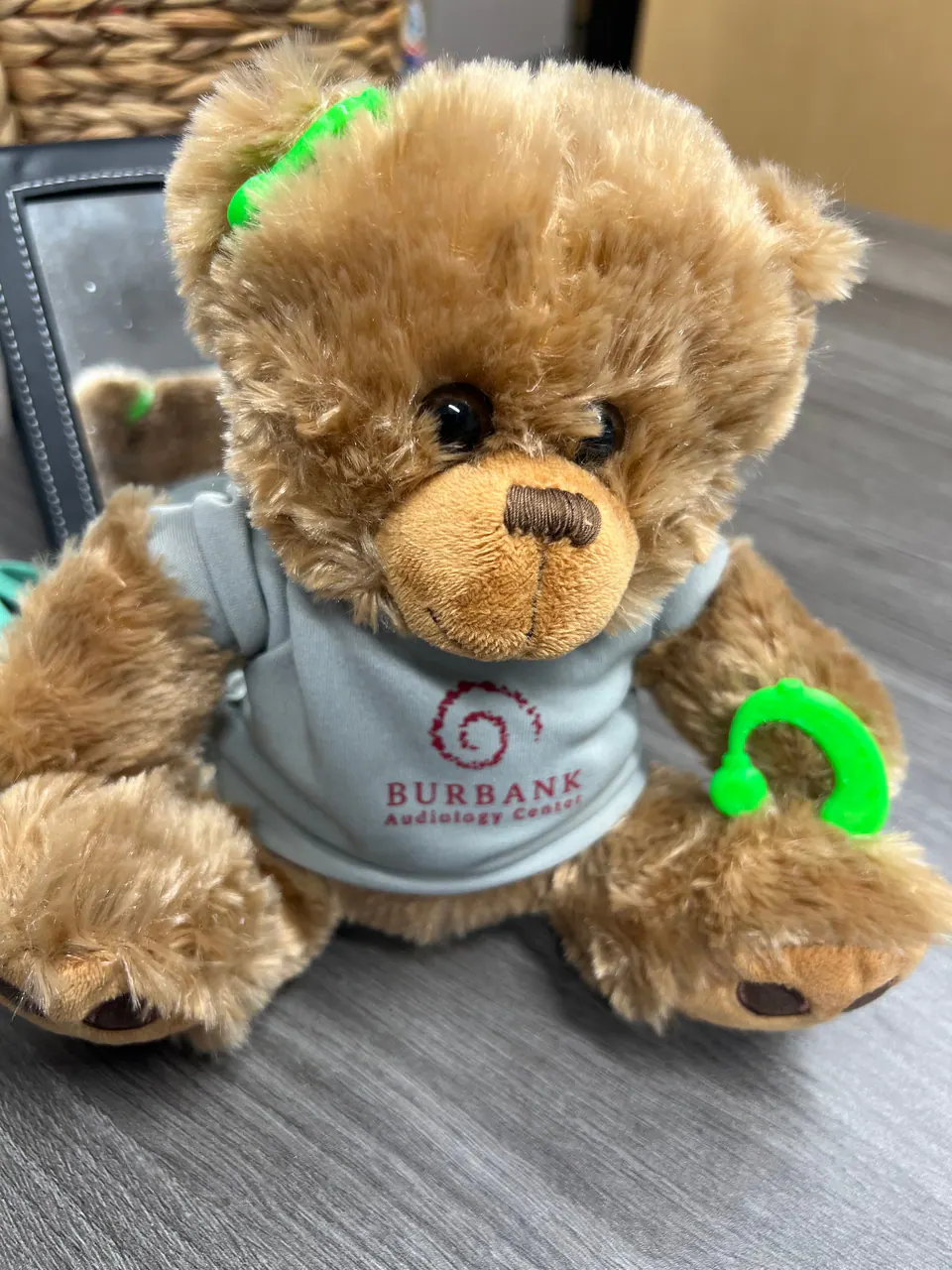
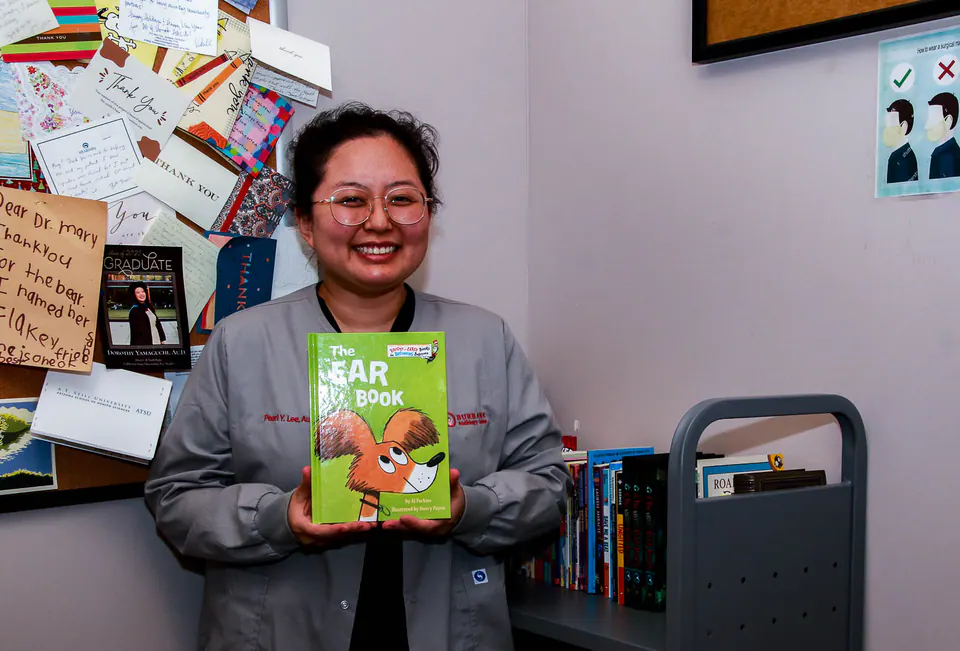
We’re here to help children with hearing loss by offering services and connecting families with valuable educational and communication resources.
Communication options
Sign language
American Sign Language (ASL)
- The primary language of many deaf people in North America.
- Combines hand movements, facial expressions and body posture.
- There is no universal sign language — each region has its own.
Listening & spoken language
Auditory-verbal therapy (AVT)
- Helps children use their residual hearing and hearing devices to develop speech.
- Promotes independence and inclusion in traditional schools.
- Additional tool: LACE (Listening and Communication Enhancement) for listening practice.
Therapy & local resources
Speech-language pathologists treat speech, language and social communication challenges.
Local specialists families have used
- Ruth Horowitz
Auditory-verbal therapy expert for children.
- Communication Matters
California Children’s Services (CCS)-paneled speech pathologists.
- Dickinson C. Ross Preschool
A communication-rich preschool curriculum.
Ask our team for current contact details and referrals.
Understanding speech delay
A pediatric speech delay means a child’s speech skills are significantly below what is expected for their age. A delay may signal a developmental difference such as hearing loss or autism, and it can affect personal, academic and social development.
The Ling Six Sound Test
A simple listening check that uses six sounds covering the full range of speech frequencies. It can help detect changes in a child’s hearing and can be done with or without hearing aids.
Make it a game: tap a card to flip it and find a picture that goes with each sound.
Say each sound
Say the sounds one at a time at a normal conversational level.
Ask for a response
Ask your child to repeat the sound or show you they heard it.
Share what you notice
If your child has trouble with any sound, let your audiologist know.
Autism & communication
Autism spectrum disorder affects social interaction, communication and behavior, and it varies widely from person to person. Some autistic people have no speech delay but communicate differently — for example, in how conversations flow. (Asperger syndrome is now part of the autism spectrum rather than a separate diagnosis.)
Every child’s communication needs are individual, and hearing evaluations can be adapted to them.
Autism Speaks (opens an external website)Questions? We’re here to help.
Connect with our team for guidance about your care or your family’s next steps.